

In this guide
- Know the job of the Brand Story section
- Find a specific beginning without inventing a legend
- Turn values into visible decisions
- Give the customer a role in the story
- Write a simple sequence before designing cards
- Choose photographs that can stand behind the words
- Connect the story to the rest of the catalogue
- Where ListingBrain can help
You do not need a dramatic founding story to make your brand worth understanding. Many small businesses begin with an ordinary observation: an item was awkward to use, the available sizes were wrong or the design choices did not suit a particular kind of customer. That can be enough, provided you explain what you did about it.
An Amazon Brand Story should help a shopper understand the thinking behind the products. It is a chance to give the catalogue a recognisable point of view, rather than repeat the same feature claims that already appear elsewhere on the page. The most useful starting point is a specific, truthful reason for the business to exist.

Know the job of the Brand Story section
Amazon distinguishes Brand Story from product-focused Basic or Premium A+ Content. Its guidance describes a dedicated brand section that can combine brand information with imagery and links to other products or the brand's Amazon store. Confirm available layouts and access in your account before planning the final build. See Amazon's A+ design guide.
Use that space to answer questions about the brand: who it serves, what it prioritises and how its products relate. Keep model-specific measurements and technical instructions with the relevant product content. A shopper should not have to read a company introduction to find the size of the item.
The distinction also helps your writing. Product content explains why this item fits a need. Brand Story explains why the range has a coherent reason to exist and what the customer can expect from it.
Find a specific beginning without inventing a legend
Write down the plain version of how the business started. Leave out the polished language first. What did you notice? Which customer did you have in mind? What choice did you make differently? The concrete answer is usually more interesting than a broad statement about passion and quality.
For a fictional storage brand, the beginning might be that its founders kept finding organisers too deep for narrow shelves. That observation suggests a useful design focus. It does not require a claim that the brand reinvented home organisation.
Do not borrow a manufacturing story you cannot support. If you source finished products, do not imply that your team handcrafts every component. You can still explain selection, design input, testing or service honestly. A modest truth is more useful than a polished claim that falls apart when someone asks a follow-up question.

Turn values into visible decisions
Words such as quality, sustainability and innovation are easy to write and difficult to judge. Choose a decision that shows what the value means in practice. Did you choose a replaceable part, a readable label or packaging that better protects the item? Explain the decision at the level you can verify.
If you have evidence, organise it before writing. Keep material specifications, design notes, supplier information and relevant product records together. The public story should reflect what those records can support, not outrun them.
Avoid turning the section into a list of badges. A short explanation of one meaningful choice can be stronger than several unexplained symbols. If a claim needs qualification, make it clear where the claim appears rather than burying the explanation elsewhere.
Give the customer a role in the story
The shopper is not reading a company history for its own sake. Connect the brand's choices to the situation the customer recognises. If the range is designed around small spaces, explain the practical consequence: pieces that are easier to place, dimensions made clear and a consistent approach across the catalogue.
Keep the focus narrow enough to be believable. A brand can serve a particular routine without claiming to transform someone's life. The language should sound like a person explaining useful work, not an award submission.
For background on expressing a coherent identity, Amazon's brand-building guide discusses brand positioning and consistency. Use your own evidence and words when writing the actual story.

Write a simple sequence before designing cards
Start with four short notes: the problem you noticed, the choice you made, the evidence behind it and the related products a shopper might want to explore. These are planning prompts, not a requirement to use a particular number of modules.
Here is an illustrative outline for the fictional small-space storage brand:
| Part | Draft idea | Evidence to gather |
|---|---|---|
| Beginning | Storage designed with narrow shelves in mind | Actual product development notes or selection criteria |
| Design choice | Clear measurements and restrained shapes | Product specifications and photographs |
| Customer context | Everyday organisation in limited space | Realistic, product-specific use scenes |
| Range navigation | Explore related organisers by purpose | Correct current product links |
The outline should remain useful even if the design changes. If a section cannot be explained clearly in a few sentences, it may need more thinking before it needs a graphic.
Choose photographs that can stand behind the words
Your own product, people and process photographs are usually the strongest evidence for a factual company story. They do not have to look like an expensive campaign. A clear, well-lit photograph of real work can be more persuasive than an unrelated image of a beautiful workshop.
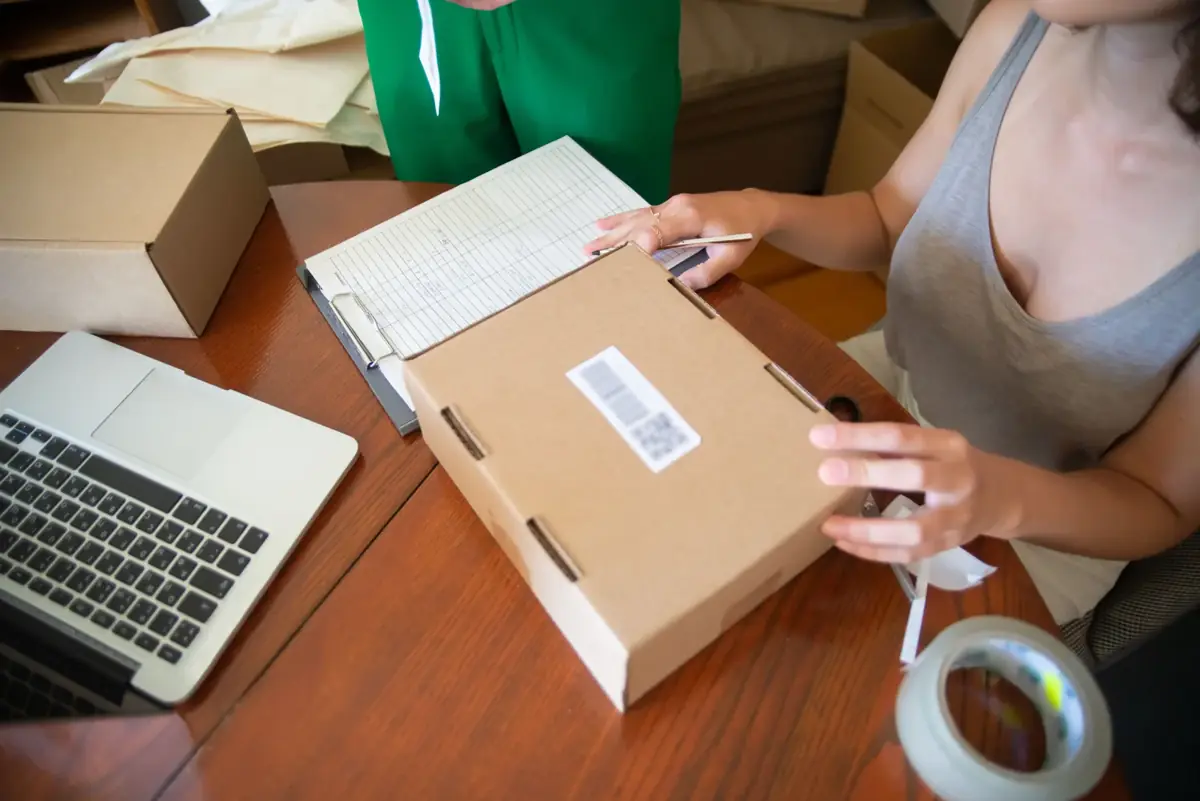
Stock photography can illustrate a general setting, but do not present a stock person as your founder, a stock factory as your production site or a stock craft process as your own. The photos in this article are labelled as editorial illustrations for that reason.
Generated scenes need the same care. They can help explore a visual direction, but they should not invent a company history. Keep factual brand evidence separate from background imagery or conceptual layouts.
Connect the story to the rest of the catalogue
Choose related product links because they help someone continue a sensible shopping task. A visitor interested in one organiser may want another size or a companion item. A random assortment of products creates a less coherent experience.
Check the destination and availability of each linked item during review. If the catalogue changes, the Brand Story may need an update too. Keep a small record of which products and claims appear in the section so they are easy to maintain.
Use consistent typography, colour and image treatment, but leave enough space for the words to remain readable. A brand system should make the story recognisable without forcing every card into the same crowded composition.
Where ListingBrain can help
ListingBrain's A+ Content workflow can help develop product-led visual assets from a reference and verified details. Brand Story still needs its own editorial thinking, and generated banner assets are not automatically a native Brand Story build.
Use the tool for the visual work it supports, then adapt and review assets for the actual module fields. Keep real photographs when the point is to prove who you are or how the business works. The ListingBrain founder page is an example of separating a person's background from product-output claims.
Read the finished story aloud before publishing. Remove any sentence that could describe almost any business. What remains should give a shopper a clearer sense of why your products exist, what you pay attention to and where they can explore next.
Editorial photographs are credited beside each image. They illustrate the topic and do not represent ListingBrain customer results or an endorsement by a depicted person.