

In this guide
The question sounds straightforward: how much does Amazon A+ Content cost? The confusing part is that people use the same phrase for two different expenses. One is access to Amazon's content feature. The other is the work required to create the photographs, text and layouts you will put into it.
Amazon's public A+ page says the feature is free for sellers who meet its eligibility requirements. That does not mean the creative work is free, and it does not remove ordinary selling-account costs. This distinction is the right place to begin a realistic budget. See the current Amazon A+ Content information for platform terms and access.

Separate platform access from content production
Access determines whether your account can publish the content type you want. Production determines whether you have useful, accurate material to publish. Check access first so you do not commission layouts for features your account cannot currently use.
Then make an asset inventory. Do you have current product photographs, approved copy, a logo, brand colours and verified specifications? Do you need new lifestyle scenes or only a clearer arrangement of existing material? A seller with complete assets has a different project from a seller starting with a sample and a supplier description.
Treat catalogue setup and content submission as separate scope items too. A designer may deliver files without uploading them. Another provider may handle the build and submission. Ask exactly where the service ends and who is responsible for checking the live result.
Break the creative budget into understandable parts
Planning covers the story and order of the modules. It includes deciding what a shopper still needs to understand after viewing the gallery. If that planning is skipped, you can end up paying for five attractive banners that repeat the same point.
Copy covers the words and the product facts behind them. Someone needs to decide which claims can be supported, which specifications matter and how to explain them clearly. Writing a headline is only part of that job. Resolving incomplete product information can take longer than the layout itself.
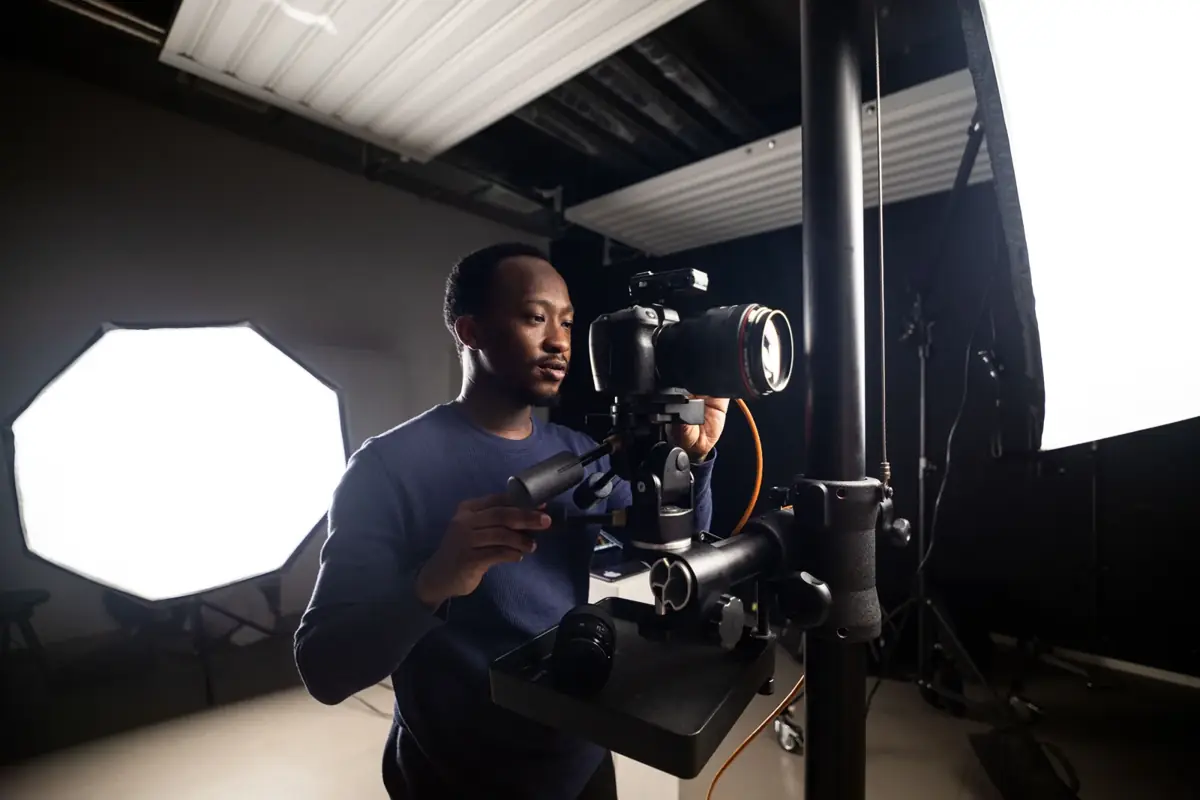
Photography covers the source images you do not already have. Retouching, models, props, locations and sample shipping may be separate items. Ask for those assumptions in writing rather than assuming that an image-heavy package includes every kind of image.
Design covers composition, image treatment, typography and delivery. Build work covers placing the assets into the selected Amazon modules. Review covers checking the text, product details, crops and final presentation. All of those stages need an owner, even if one person handles several of them.
Compare quotes using the same deliverables
Ask each provider to quote against the same content brief. Define the number of products, variations, languages and module concepts. A project for one colour of one product is not equivalent to a reusable system for twenty SKUs.
| Budget line | Define before requesting a quote |
|---|---|
| Strategy and module plan | Buyer questions, module purposes and proposed sequence |
| Copy | Who supplies facts, who writes and who approves |
| Source imagery | Existing assets versus new photography or illustration |
| Design | Finished modules, alternative concepts and export formats |
| Build and submission | File delivery only or work inside the account |
| Revisions | Included rounds and the boundary between correction and new scope |
| Adaptations | Additional products, variations and languages |
Be careful with per-module pricing. One module might be a simple product-and-text layout; another might require custom photography and a technical explanation. The number of modules alone does not describe the amount of work.
A sample budget you can adapt
Here is a hypothetical planning example, not a survey of market rates. Imagine a small project with $120 allocated to planning and copy, $240 to design, $100 to image preparation and $60 to build and review. The total is $520 before any applicable taxes or extra work.
If the same project needs a new photo shoot, that expense belongs on top of the example. If you already have approved copy and suitable photographs, some of the work may disappear. The purpose of the breakdown is to show where the money goes, not to suggest that every seller should pay that amount.
For internal work, record hours as well as cash. If a team member spends six hours assembling assets and three hours correcting facts, that time is part of production even when no freelancer sends an invoice. An apparently free workflow can still consume valuable working time.

Where DIY, freelancers, agencies and AI fit
A DIY approach can suit a seller with clear facts, good photographs and enough design experience to build readable modules. The tradeoff is time, especially if the asset library is disorganised or the product story is still unclear.
A freelancer can add focused design or copy expertise. An agency may provide a wider process involving strategy, capture, production and account work. Compare the service you need rather than assuming that one type of provider is always better.
An AI-assisted workflow can help produce draft layouts or supporting visuals from existing source material. It still requires accurate inputs and a final review. Include generation costs, corrections and your review time in the comparison. Low initial output cost is useful only when the assets can be made accurate and usable.
ListingBrain's A+ Content generator creates draft visual modules from product inputs. It does not itself grant Amazon access or replace the account's publication process. Check current product pricing on ListingBrain before budgeting; this article avoids freezing a changing offer into a cost comparison.
Keep reuse separate from careless duplication
A shared visual system can reduce repeated work across related products. You may reuse typography, colour treatment and the general module sequence. Product-specific dimensions, included items, compatibility and use scenes still need checking for every SKU.
Budget for those adaptations explicitly. A new colour may need a careful image swap. A new model with different controls may require a new explanation. Calling both jobs a simple reskin can lead to incorrect content and avoidable revisions.
For multilingual content, allow space for text length to change and have the wording reviewed by someone who understands the target language. Copying the original layout and squeezing in a translation is not a reliable delivery method.
Make the first investment specific
Before expanding the budget, identify the largest missing explanation on the product page. Is the buyer unsure about construction, size, setup or the difference between models? Spend the first effort on that question rather than commissioning decorative content simply to fill space.
Use a written acceptance checklist: correct product, verified facts, readable text, appropriate module format and complete exports. Agree on it before design starts. It gives everyone a clearer definition of finished work.
The useful answer to A+ Content cost is a scoped budget, not a single universal price. Once you separate platform access, asset creation and production work, you can choose a process that fits both the product and the amount of work you actually need.
Editorial photographs are credited beside each image. They illustrate the topic and do not represent ListingBrain customer results or an endorsement by a depicted person.